
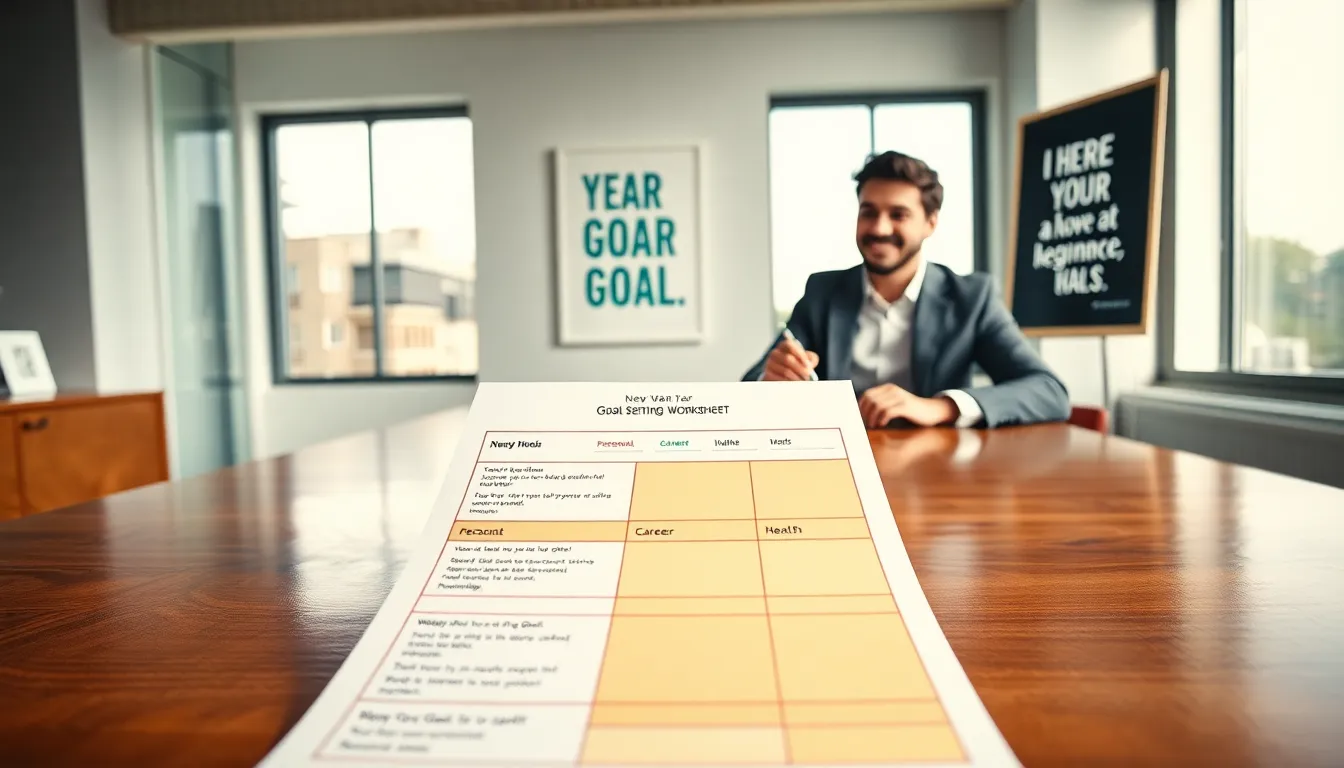
The start of a new year is often viewed as a blank canvas, waiting for the brushstrokes of ambitious goals and dreams. But let’s face it, most people abandon the resolutions before the champagne bubbles settle. Who’s to blame them? It’s easier to binge-watch a series than to chase after lofty ambitions. But, this year can be different with a structured “New Year Goal Setting Worksheet.” This handy tool does more than gather dust, it’s the key to transforming those grand ideas into achievable milestones. So, buckle up as we unveil everything you need to know to slay those goals like a pro.
Understanding the Importance of Goal Setting

Goal setting isn’t just a motivational poster cliché: it’s a game-changing strategy that aligns daily actions with long-term aspirations. Research shows that individuals who set specific goals are 10 times more likely to achieve significant progress compared to those who don’t. Goals provide a roadmap to success. Without them, one might as well try directing traffic blindfolded. They help clarify personal values and encourage a sense of purpose, making life more satisfying and thoughtful. When individuals have clear targets, their daily decisions become a series of strategic moves toward achieving those aspirations.
Types of Goals to Consider
Goals can be categorized into several types, each serving unique purposes:
Short-Term Goals
These are achievable within weeks or months. They are crucial for building momentum and confidence.
Long-Term Goals
Often spanning years, these goals are your ultimate dreams. They provide direction and clarity on what steps you need to take in the here and now.
Personal Development Goals
These focus on improving skills or knowledge. Examples include learning a language or taking a course.
Career Goals
Such ambitions could involve landing a promotion or starting a business. These goals typically align with your professional aspirations.
Health and Fitness Goals
Anyone trying to get fit will tell you that healthy eating and regular workouts don’t just happen. Specific fitness goals are vital for motivation and accountability.
By identifying these categories, individuals can create a well-rounded goal-setting worksheet that addresses all facets of life.
Creating Your New Year Goal Setting Worksheet
Designing a goal-setting worksheet is easier than it seems. Here’s a step-by-step guide:
1. Identify Your Goals
Start by brainstorming what you want to achieve in the coming year. Think big and don’t hold back.
2. Categorize Your Goals
Separate your goals into the types discussed earlier. Visualize your journey better.
3. Set SMART Criteria
Ensure your goals are Specific, Measurable, Achievable, Relevant, and Time-bound. This format ensures clarity in your objectives.
4. Breakdown into Actionable Steps
For each goal, write down smaller, manageable tasks. This makes the process less daunting.
5. Design the Layout
Use bullet points, tables, or creative designs. Make it visually appealing to increase motivation to revisit it.
6. Regularly Review and Revise
Finally, create a schedule to revisit your worksheet. Assessing progress contributes to staying focused and adaptable.
Creating a personalized New Year Goal Setting Worksheet empowers individuals to take charge of their lives.
Strategies for Effective Goal Achievement
Achieving goals takes more than a worksheet: it involves strategic planning and execution. Here are tried-and-true methods:
1. Stay Committed
Consistency is key. Setting reminders helps reinforce commitment.
2. Find an Accountability Partner
Sharing goals with a friend or mentor boosts accountability and offers encouragement.
3. Visualize Success
Create a vision board that represents your goals. It’s a visual reminder of what you’re working toward.
4. Celebrate Small Wins
Don’t wait until the finish line to celebrate. Recognizing smaller milestones keeps motivation high.
5. Maintain Flexibility
Be open to adjusting your goals as circumstances change. Flexibility fosters resilience.
Tracking Your Progress
Tracking progress is essential for understanding what works and what doesn’t. Here’s how to do it effectively:
1. Use a Journal
Maintain a regular journal to record achievements, challenges, and plans moving forward.
2. Weekly or Monthly Check-ins
Schedule regular reviews to assess progress. Adjust strategies as necessary.
3. Use Apps and Tools
Many applications can help track goals and provide reminders. Technology can simplify keeping your objectives in sight.
Adjusting Goals Throughout the Year
The New Year isn’t the only time to reflect on goals. Life is unpredictable, and flexibility is vital. Here’s how to adjust effectively:
1. Reevaluate Goals Periodically
Set aside time for adjustment every few months. Ask yourself if the goals still align with current values.
2. Be Realistic
Circumstances change, and it’s okay for goals to evolve too. If something becomes unattainable, modify it.


